
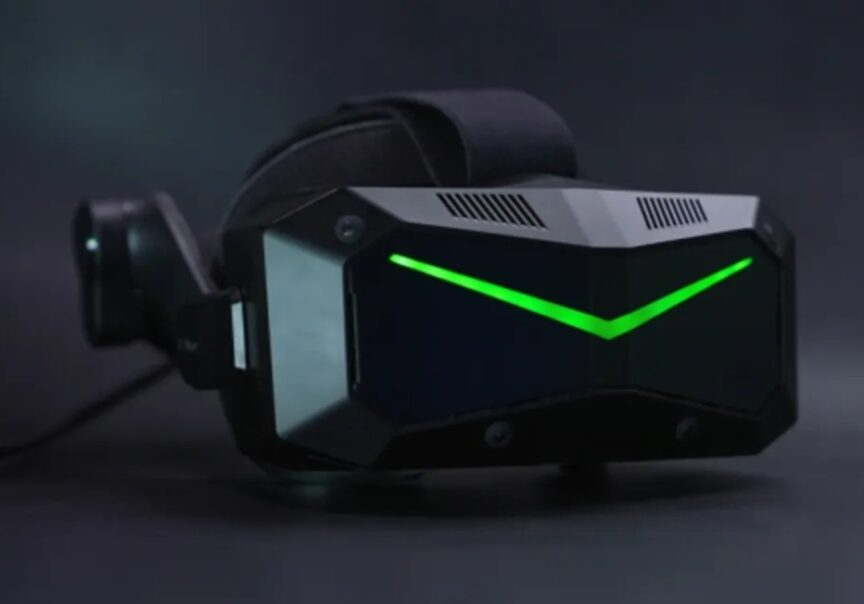
Simulation games are a whole different beast when it comes to gaming. They need specialized hardware like joysticks, racing wheels, throttles etc. to be enjoyed fully. Since 2016, I have added VR to that essential list of requirements. I have a super ultrawide 57″ monitor but it too pales in comparison to a VR headset when it comes to immersion.
We have come a long way in the last 10 years. VR clarity is now as good as 4k monitors. Back then, the main issue was Screen Door Effect which is when you can see each individual pixels. That issue is now completely gone for the past 2-3 years at least.
In 2026, the main things I look for in a VR headset for sims are comfort, picture quality and performance. FoV is also important and then you come to things like sound, price and so on. So lets dive into how the Pimax Crystal Super ranks on all these metrics.
Pimax Crystal Super
- Resolution of 3840x3840 per eye
- Dynamic Foveated Rendering allows for better performance
- Highest FoV
*Using the above link will automatically apply our special discount code (GBN) on the Pimax store!
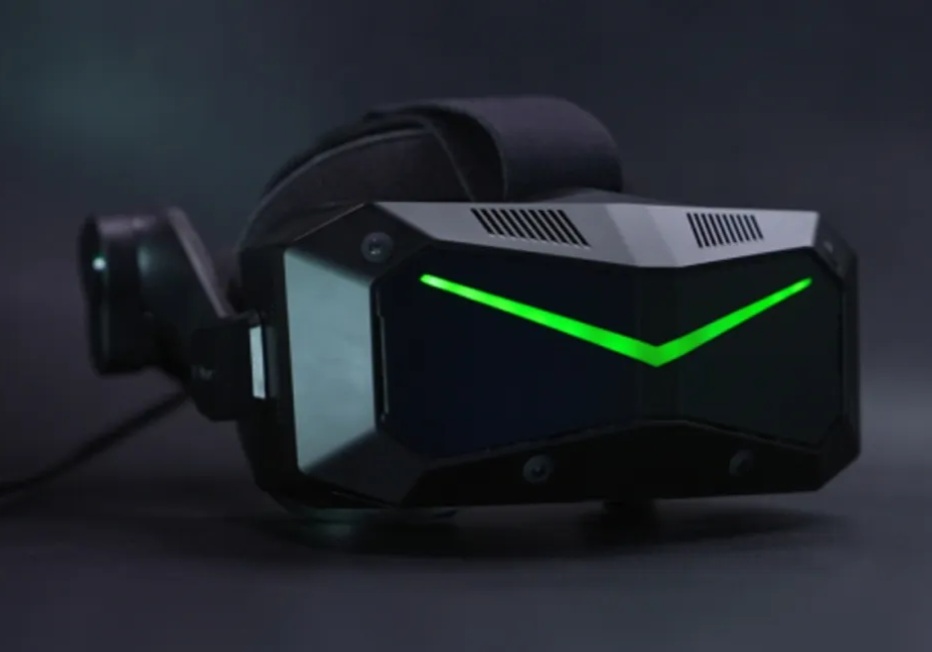
Comfort: Pimax headsets used to be bulky and I am glad they are improving on this. The Pimax Crystal Super is much lighter and smaller than the older Pimax Crystal. This greatly increases the amount of time you can spend in the game. Important because flight or driving sessions can be long.
Personally, I have been using the Pimax provided straps only but if you are having issues, you can go for after market straps.
Picture Quality/ FoV: The clarity is almost near perfect now. This used to be such a big deal back in the day but now the clarity is so much better that it just seems like an obvious thing.
However, these are dependent on which optical module you choose so I will dive deeper into this when I review the various optical engines in detail below.
Performance: These are high end headsets and they need a good GPU. I have been testing with my Nvidia 4090 and it gets the job done. The 4080/ 5080 will also work. Below that, you will have to compromise on some settings but its still doable. Just don’t expect to run VR with an entry level PC. If you want recommendations for a good VR PC, you should check our game-specific guides.
Surprisingly, there is a big difference between the various modules when it comes to performance. More on that below in the detail review section.
Sound: The sound is ok. Nothing ground breaking. The DMAS headphones are better but they add weight which I don’t like. So I just use the inbuilt speakers or just use the sound from my the speakers attached to my PC. If you are an audiophile, just use your favourite high end headphones.
Other features:
- The IPD adjustment is automatic or you can do it manually via software.
- The max refresh rate is 90 Hz which is standard and pretty good.
- The per eye resolution is 3840×3840 for the QLED modules and 3840×3552 for the OLED.
Pimax Crystal Super Optical engines – 50PPD vs 57 PPD vs OLED vs Ultrawide
The Pimax Crystal Super is all about the Optical Engines. These modules are easy to swap out and completely change the game. Each one has its own pros and cons and things it does best. Here are my detail reviews for all four modules.
Pimax Crystal Super
- Resolution of 3840x3840 per eye
- Dynamic Foveated Rendering allows for better performance
- Highest FoV
*Using the above link will automatically apply our special discount code (GBN) on the Pimax store!
50PPD – The 50 PPD is the base version as its the one that arrived first. Its also the middle of the pack for most things. If you don’t know which optical engine to get, just get the 50 PPD.
Micro OLED – The OLED is what the community was most excited about, including me. And it doesn’t disappoint. This thing has amazing clarity and colours. OLED also just looks and feels smoother in term of transitions. These are high end Sony OLED screens so you are getting the best of what is available out there.
Another winner here is the lenses. These lenses are really good and do a lot of the heavy lifting for the OLED.
57PPD – The 57 is the clarity king. Which makes sense because it has the highest pixel density. However, this comes at the cost of FoV because the screen is smaller. So if you want the maximum clarity but in a smaller area, this is your pick.
Another surprising result is that this module also has the best performance. The reason for this is the lower extra pixels needed to push to compensate for distortion. So if you prefer high frames or have a mid range GPU, this module makes sense.
Another personal anecdote – Even though the 57 PPD has a lower FoV, it doesn’t seem like that much of a bad deal. Because the image on the periphery is going to be sub optimal anyway. So I would prefer super clear image at the centre even if it comes at the cost of lower FoV.
Ultrawide – The ultrawide has the highest FoV. I feel like this is a better option for racing sim enthusiasts. Because you don’t need insane clarity for racing sims while the extra FoV does help with immersion. The image at the periphery is not going to be super clear but in a racing game you aren’t looking at the sides anyway.
Which Pimax Crystal Super optical engine is the best?
Based on the everything highlighted above, I think the answer is clear.
- OLED is best for space sims because OLED has incredible blacks and is clear also.
- 57 PPD for flight sims where you need max clarity at the center to identify bogies or read radar and stuff.
- Ultrawide for racing games
- 50 PPD for the jack of all trades option
OLED
The OLED is my personal favourite because it has the best performance out of the bunch. The colours are obviously better too, being an OLED. Yes it has lower brightness on paper but that never bothered me in game. The only negative I noticed was the lower FoV when I first tried it on. But after 30 mins or so I got used to it and it doesn’t really bother me anymore. Meanwhile, the better performance more than makes up for it IMO.
About the Author